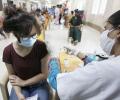
The DCGI's nod came after the subject expert committee on COVID-19 of the CSDCO last week recommended granting emergency use authorisation to Covovax for the age group of 7 to 11 years.

The tenure of the incumbent AIIMS director, Dr Randeep Guleria, which was set to end on March 24, was extended by three months.
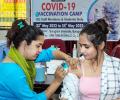
The Standing Technical Sub-Committee (STSC) of the National Technical Advisory Group on Immunisation (NTAGI) on Thursday recommended reducing the gap between the second and precaution doses of COVID-19 vaccines from the current nine to six months, official sources said.

The Universal Immunisation Programme is one of the largest vaccination projects in the world aimed at protecting children and pregnant mothers from preventable diseases. Under it, the government provides shots for 12 vaccine-preventable diseases, such as polio, diphtheria, tetanus, measles, and hepatitis B, for free.

The Union health ministry has also directed airport and port health officers to be vigilant, they said.
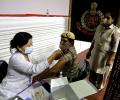
The government is likely to soon reduce the gap between the second dose of Covid-19 vaccine and the precaution dose from the current nine months to six months, official sources said on Wednesday.

The reason is that because of the hybrid immunity after three waves of natural infection and a large proportion of adults receiving both doses of COVID-19 vaccine, the susceptible pool has come down drastically, Lahariya said.

"As of now, there are no norms and regulations under the National Medical Commission to accommodate medical students, who were studying abroad and had to return to India midway, in Indian medical colleges in between an academic session," a health ministry official told PTI, on the condition of anonymity.
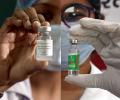
Under the conditions, the firms shall submit data of ongoing clinical trials and the vaccines to be supplied for programmatic setting.Adverse event following immunisation will continue to be monitored.
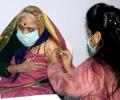
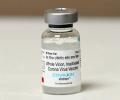
An expert panel of India's central drug authority on Wednesday recommended granting regular market approval to COVID vaccines Covishield and Covaxin for use in adult population subject to certain conditions, official sources said.

The Indian Council of Medical Research's national task force for COVID-19 has decided against including antiviral drug Molnupiravir in the clinical management protocol for COVID-19 as of now, official sources said on Tuesday.

A second wave of Covid driven by the Delta variant engulfed the country in May-June bringing the health system to its knees and leaving people gasping for help.
Healthcare and frontline workers and citizens above 60 years of age with comorbidities would be administered the third dose of the same vaccine they had been given before.
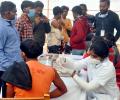
The gap between second dose of COVID-19 vaccine and the third, which is being called a 'precaution dose,' is likely to be nine to 12 months, official sources said on Sunday.
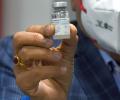
The Subject Expert Committee on COVID-19 of the CDSCO on October 12 after deliberating Bharat Biotech's EUA application had recommended granting emergency use approval to Covaxin for use in the 12-18 years age group with certain conditions.
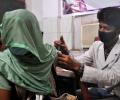
According to officials, an additional dose of vaccine is different from a booster dose.

The presence of spike protein facilitates a virus' entry into the host cell and is responsible for making it transmissible and causing infection.

The Serum Institute of India (SII) had put in an application to the Drugs Controller General of India (DCGI) in October for grant of market authorisation of Covovax for restricted use in emergency situations.
The quantity of Covid vaccines to be exported will be decided by the government every month to ensure there is no dearth of domestic availability.

The aim is also to push for post-mortem for organ donation even after sundown if adequate infrastructure is available.
 © 2026 Rediff.com - Investor Information - Advertise with us - Disclaimer - Privacy Policy - Sitemap - Feedback - About us - Terms of use - Grievances